
Which Change Management path suits you?
Five questions to find where to start.
1 / 5 — What is your role in transformation projects?

A new ERP, a reorganization, AI arriving in teams: transformation projects keep multiplying. Yet many fail for a reason that has nothing to do with technology. The tools work, but people do not adopt them.
That is exactly where change management comes in. In fact, searches for the term nearly quintupled in France in one year, according to Google Trends. Companies are looking for people who can support change with a method, not just with good intentions.
The good news is that this skill can be structured quickly. Indeed, the APMG certification path takes five days, from the first module to the second exam. This article explains what you learn each day and what the exams validate. It also helps you choose between the Foundation level and the full path.

For a long time, supporting change meant an information session and a user guide. Today, organizations measure the cost of failed adoption: delays, workarounds, low morale and sometimes a return to the old tool.
Take a common case. A company rolls out a new expense management tool. Technically, everything works on day one. Six months later, however, half of the staff still email their receipts to the accounting team. The team then has to handle two processes in parallel. The promised gain disappears, and the project is remembered as a failure. Yet nobody had identified the habits that needed to change, or appointed champions in the teams.
In response to failures like this, the change manager role has professionalized. It now has recognized frameworks, professional associations and certifications. Among them, the APMG International certification stands out. It was developed in partnership with the Change Management Institute, a global not-for-profit association founded in 2005.
According to APMG’s official overview, the certification is designed for several profiles:
In other words, you do not need the change manager title to benefit. A project manager running a rollout gains as much as an HR specialist.

The certification has two levels. Foundation typically takes three days and Practitioner two days, as APMG states. Put together, they form a five-day path.
The order matters. Foundation is a prerequisite for Practitioner. So you cannot go straight to the second level, even with years of field experience.
The current program is based on the third version of the framework, with an official study guide provided to candidates. For Switzerland, one practical point stands out: the exams are available in French and German, as well as English. A bilingual team can therefore get certified in its own language.
Five consecutive days take some preparation. Block your calendar, let your team know and name a backup for urgent matters. Also keep a little time each evening to reread the study guide. After all, the exam usually takes place on the last day of each level, and a short review beats last-minute cramming.

The first three days cover the Foundation level. The outline below follows the course program. However, the exact order may vary from one session to the next.
The course starts with people, not processes. You study how people learn, models of individual change and what drives motivation. You also see how to account for differences between people, rather than treating them as a single block.
This focus on the individual has a very practical use. For example, it explains why the same message reassures one employee and worries another. As a result, you learn to tailor your support instead of repeating the same presentation to everyone.
Day two widens the lens. You cover organizational culture, change process models and the difference between planned and emergent change. Next, you learn to identify and segment stakeholders. You map them, then choose a suitable influencing strategy.
Day three brings together the tools most used in the field:
The Foundation exam closes this first part. If you are only aiming for this level, your path ends here.
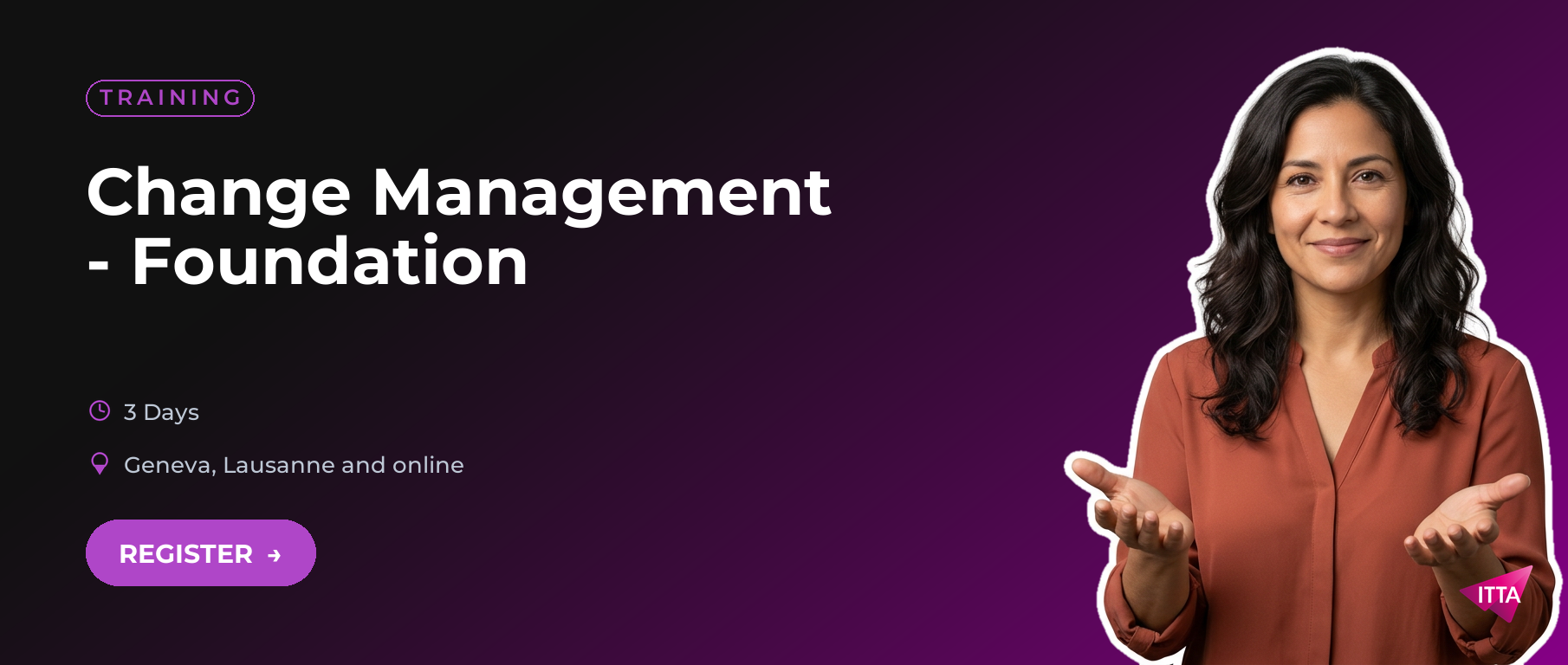

The Practitioner level shifts gears. It is no longer about knowing the concepts but about applying them to a real situation. Both days therefore follow a case-study approach.
You first work on how change connects with project management. In practice, you identify key roles and owners. Then you analyze the project environment and build a change delivery plan. Next, you study the levers available to you: environmental levers, leadership levers and organizational development levers.
The final day focuses on long-term adoption. In particular, you discover Kelman’s three levels of adoption and the idea of critical mass. You also learn to spot the vicious and virtuous circles that reinforce or slow down change. The Practitioner exam wraps up the day.
Kelman’s model distinguishes three levels: compliance, identification and internalization. This distinction changes how you steer a project. For instance, a team that follows a new process only because someone checks will slip back to old habits as soon as the checks stop. Your goal is therefore to move people toward internalization, where change holds on its own.
The two exams do not measure the same thing. Foundation checks that you know the concepts, models and vocabulary. Practitioner, on the other hand, puts you in front of a scenario and asks you to choose the right approach.
Consequently, preparation differs. For Foundation, review the definitions and models in the study guide. For Practitioner, practice on cases instead, asking yourself each time which tool to apply and why. APMG also provides a sample exam for candidates.
A few simple habits noticeably improve your chances of passing:
Finally, validity differs too. Foundation does not expire. By contrast, passing Practitioner gives you Registered Practitioner status for five years. To keep it, you take a re-registration exam between the third and fifth year.
Should you take all five days in one go? It depends on your role in transformation projects. The table below sums up the most common cases.
| Your situation | Recommended level | Why |
|---|---|---|
| Manager supporting their team | Foundation | Understanding reactions and vocabulary is often enough |
| HR or communications specialist | Foundation, then Practitioner | Communication and impact tools are useful right away |
| Transformation project manager | Full path | The link between project and adoption is at the heart of Practitioner |
| Current or aspiring change manager | Full path | Registered Practitioner status strengthens your profile |
The full path has a practical advantage: you take both levels while the concepts are fresh. Conversely, spacing the two levels months apart often means reviewing Foundation again before tackling Practitioner.

A certification does not replace experience. However, it gives you a framework to build it faster. Here are four ways to extend the path.
Pick an ongoing project, even a modest one, and apply three tools: stakeholder mapping, impact assessment and the communication plan. Then document what worked. This first case will become your best argument in job interviews.
Successful change is measured, and not just on go-live day. For example, track a few simple indicators:
These figures show you where to step up support. Moreover, they prove the value of your work to management.
The APMG certification also opens a path toward independent accreditation by the Change Management Institute. Successful candidates can also claim two months of free membership in the association. It is a chance to exchange with other practitioners and compare approaches.
Lastly, change management makes the most sense when it is built into the project from the start. Our article on the most common project management mistakes shows how much people issues weigh in failures. You will also find all our change management courses on our website.
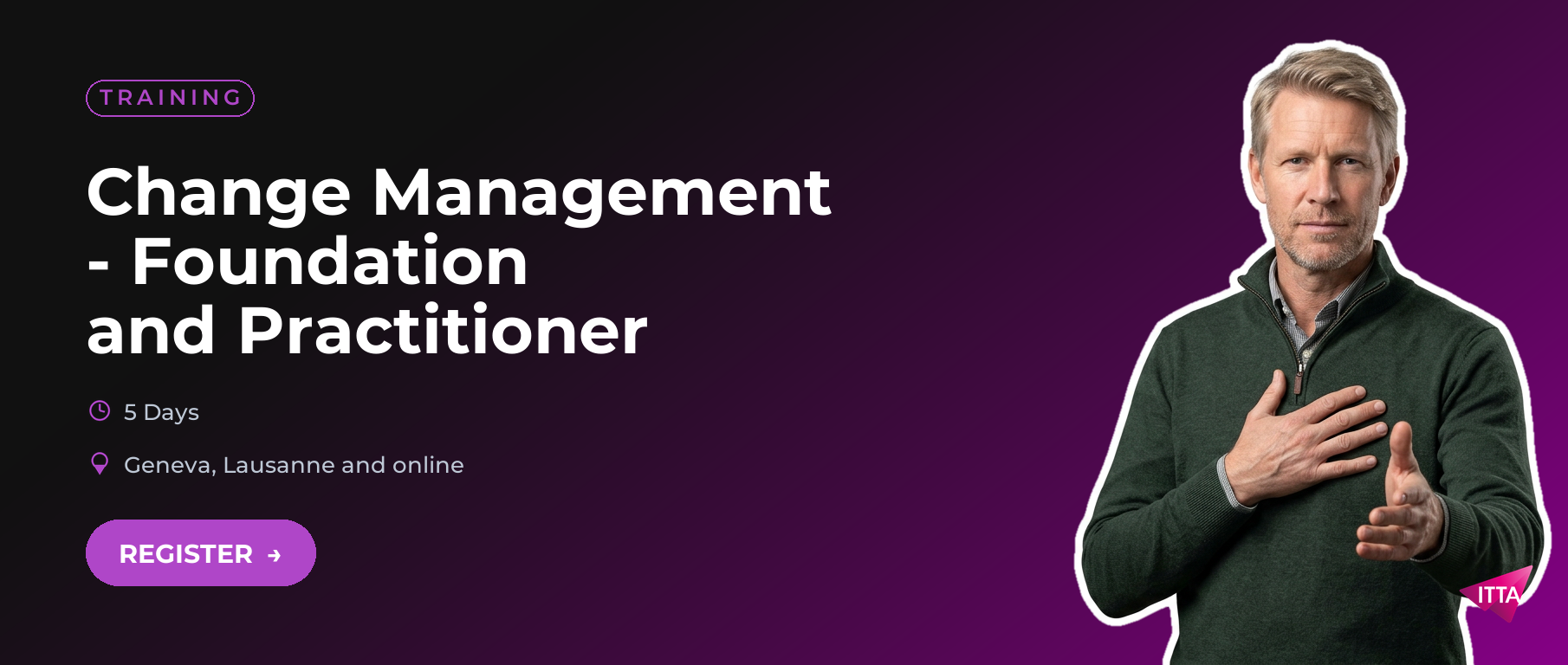
Getting certified in change management in five days is entirely realistic. The APMG path combines three days of Foundation, focused on people and the organization, with two days of Practitioner, focused on application. Each level ends with an exam, available in both French and German.
The real work, however, starts after the course. Apply the tools to a first project, measure adoption and document your results. That move into practice is what turns a certification into a recognized skill.
How long does it take to get the APMG Change Management certification?
The full path usually takes five days: three days for Foundation and two days for Practitioner, each followed by its exam.
Can you go straight to the Practitioner level?
No. Foundation is a prerequisite for Practitioner, whatever your experience.
Does the Change Management certification expire?
Foundation does not expire. Registered Practitioner status lasts five years and is renewed through an exam between the third and fifth year.
Is the exam available in French?
Yes. APMG offers the Change Management exams in French, German, English and several other languages.
Do you need to be a change manager to take the course?
No. The change management certification is also designed for project managers, managers and HR, communications or learning specialists involved in a transformation.